Easy-to-Clean Coffee Machines: Owner-Reported Winners and Failures (2026)
The short answer
When shopping for a new coffee machine, most of us focus on brew temperature, pressure bars, or the number of programmable settings. However, the true cost of a machine is measured in the minutes you spend scru
Why "Easy to Clean" is the Most Important Spec
When shopping for a new coffee machine, most of us focus on brew temperature, pressure bars, or the number of programmable settings. However, the true cost of a machine is measured in the minutes you spend scrubbing it every week. A machine that is difficult to maintain doesn't just cost you time; it eventually costs you the machine itself.
In our verified breakdown reports, we have seen a recurring pattern: when a machine is designed with inaccessible components, users simply stop cleaning it. This neglect leads to a cascade of failures, from clogged filters to complete mechanical breakdowns. If you cannot reach a part with a standard brush or a cloth, that part will eventually collect biofilm, old coffee oils, and mineral scale, degrading the taste of your coffee and the lifespan of the hardware.
Breville BES870XL Barista Express Espresso Machine, Brushed Stainless Steel (paid link) ↗
Where do most coffee machines fail in maintenance?
Based on owner reports, cleaning failures generally fall into four categories. Understanding these will help you spot red flags during your research.
The Accessibility Gap The most frustrating failure occurs when a component that requires regular cleaning is locked behind the chassis. In our verified breakdown reports, users have expressed frustration when they cannot disassemble a unit even with a screwdriver. When a manufacturer requires specialized tools or permanent fasteners to reach a high-debris area, the machine is effectively designed to be disposable.
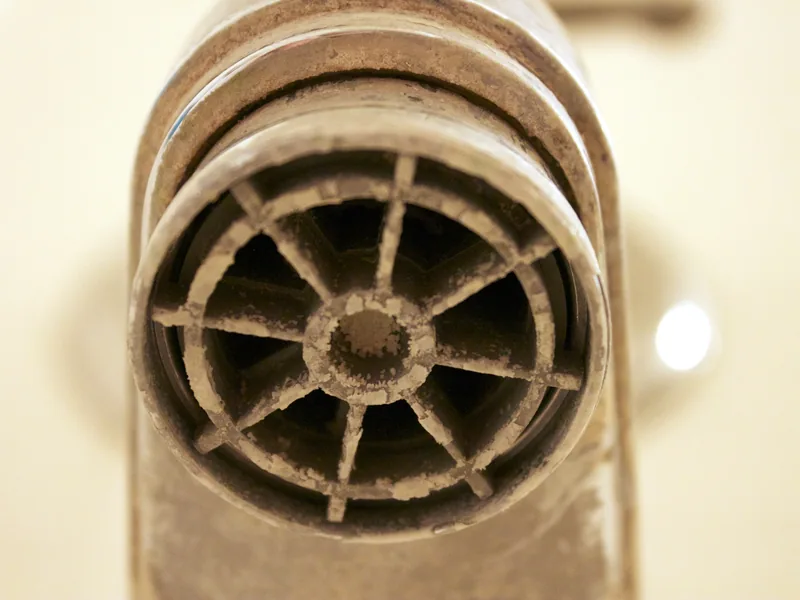
The Chemical Myth Many modern machines promote "automatic cleaning cycles" using tablets or liquids. While these are helpful for descaling internal pipes, they are not a substitute for physical scrubbing. Evidence from our verified breakdown reports shows that chemical solutions often fail to clean the dispensing head where water exits the machine. Manual intervention is required to remove buildup in these areas, regardless of how many cleaning tablets are used.
Grinder and Filter Blockages For all-in-one machines, the grinder is a primary point of failure. Debris buildup can lead to a total stop in operation. In our verified breakdown reports, users noted that their machines stopped grinding entirely until the grinder was manually cleaned. Similarly, "stuffy" filters—both the main internal filter and the cup filter—can choke the machine's flow, requiring a level of manual cleaning that many users find intuitive only after the machine stops working.
Invisible Scaling The most dangerous failure is the one you can't see. Because water may continue to flow even as minerals build up, many owners ignore maintenance for years. In our verified breakdown reports, this neglect has led to steamers that stop working and machines that overheat to the point of nearly boiling. Additionally, leaving pods in the brewer has been identified as a factor that exacerbates these cleanliness issues.
How to spot a "cleanable" machine before you buy
To avoid the pitfalls mentioned above, you need to look past the marketing photos and examine the physical architecture of the machine.
First, check the "wet zones." Look at the brew head and the drip tray. Can these be removed without tools? If the dispensing head is fixed in place, you will likely struggle with the same buildup reported by other owners.
Second, investigate the grinder access. If the machine has a built-in grinder, check if the hopper or the grinding chamber can be opened for vacuuming or brushing. If the grinder is a sealed black box, any oil buildup or bean fragment jam will require a professional repair rather than a quick home fix.
Third, evaluate the water system. A machine with a removable reservoir is a baseline requirement, but look for how the internal filtration is handled. If the filters are buried deep within the chassis, you are more likely to experience the "stuffy filter" syndrome seen in our verified breakdown reports.
Breville 54mm Backflush Cleaning Disc (2 pack) (paid link) ↗
Common maintenance myths debunked
Myth: "If the water flows, it's clean." As we have seen in our verified breakdown reports, this is a dangerous assumption. Internal scaling happens silently. By the time you notice a drop in water pressure or a malfunctioning steamer, the damage to the heating element may already be permanent.
Myth: "Automatic cycles replace manual scrubbing." Chemicals cannot remove physical debris or thick coffee sludge from the dispensing head. A machine that relies solely on "cleaning pods" often hides the fact that the user still needs to manually scrub the areas where coffee actually touches the cup.
Myth: "K-cups make cleaning unnecessary." While pods reduce the mess of loose grounds, they don't eliminate the need for internal maintenance. Leaving a pod in the brewer after the cycle is complete can actually worsen the cleanliness and performance of the machine over time.
Buying checklist before checkout
Before you commit to a new machine, run through this list to ensure you aren't buying a future maintenance headache:
- Tool-free access: Can the brew head, drip tray, and waste bin be removed without a screwdriver?
- Grinder transparency: Is there a clear way to access and clean the grinder internals?
- Manual scrub points: Does the manual explicitly explain how to physically clean the dispensing head?
- Filter accessibility: Are the water and coffee filters easy to locate and replace?
- Descaling clarity: Is the descaling process a clear, guided cycle, or a vague suggestion?
- Component durability: Are the removable parts made of high-quality plastic or metal that can withstand regular scrubbing?
Final thoughts on long-term ownership
The best coffee machine is not the one with the most features, but the one you can actually keep in working order. When a machine is designed for accessibility, it stops being a source of frustration and starts being a reliable tool. By prioritizing transparency in design over the promise of "automatic" cleaning, you ensure that your morning ritual remains sacred and your investment lasts for years rather than months.
This guide may contain affiliate links — we may earn a commission at no extra cost to you.
Free
Get the Coffee-Machine Buying Checklist
The 7 checks + 4 red flags, in one printable PDF.
The Coffee Machine Failure Report
Every failure pattern we found, ranked by how often owners report it, plus the buying criteria that keep the worst machines out of your kitchen — one PDF, a 15-minute read.